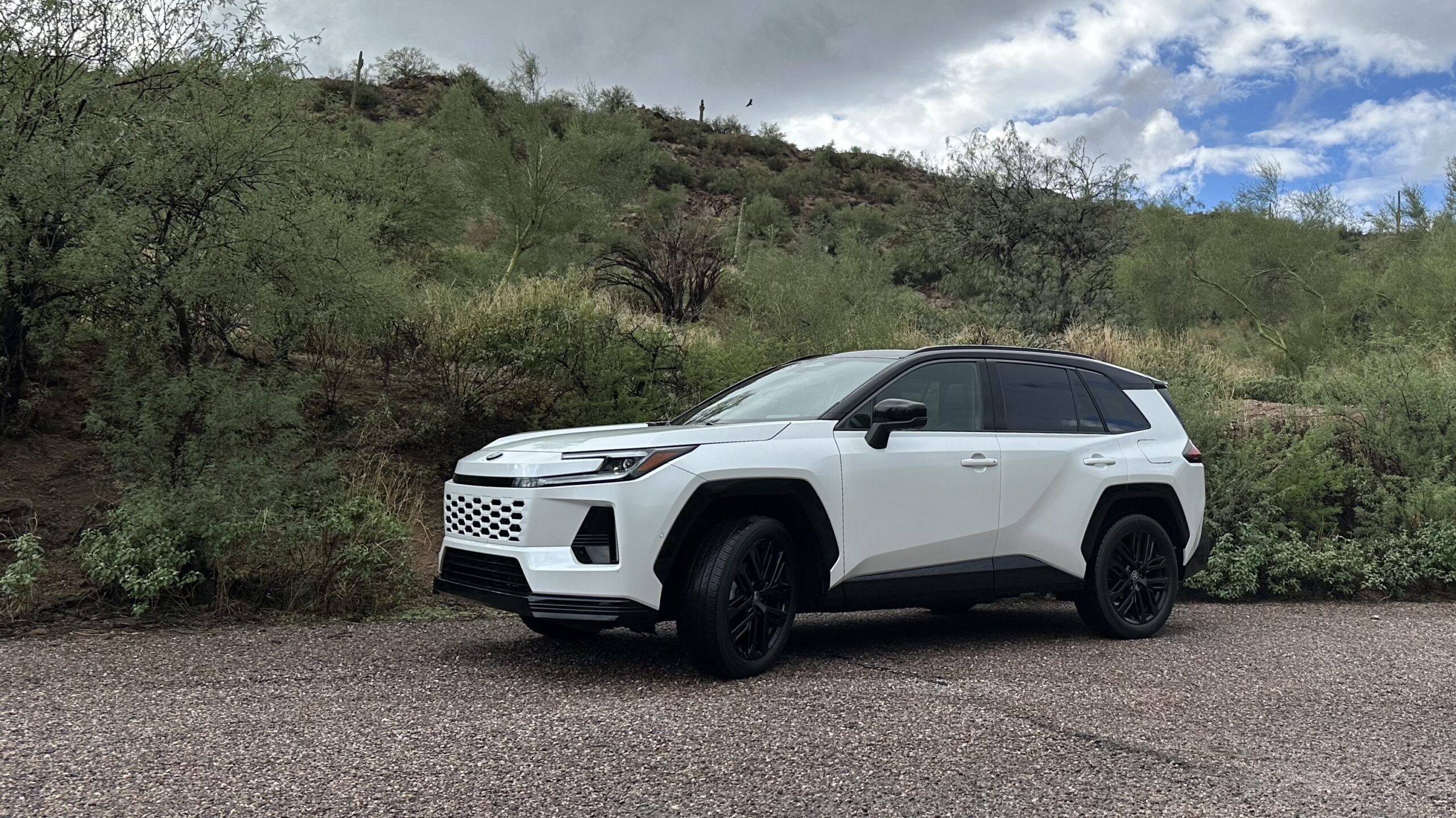
Toyota’s 2026 RAV4 starts arriving in dealer showrooms in December, and fans of America’s best-selling vehicle aren’t going to be disappointed.
Redesigned and extensively re-engineered, it’s a whole new RAV4, the latest in a long line stretching back to the small crossover’s 1994 introduction in Japan -1996 in the U.S.
The 6th generation of world’s first compact crossover has more usable interior and cargo space, new interior design, better seats, bigger information and entertainment screens, more wireless phone chargers, more horsepower and torque, cleaner looks and, most important, much-improved ride and handling versus previous models.
It also no longer comes with an internal-combustion-only engine choice. All 2026 RAV4s will be either conventional hybrids or PHEVs, and the plug-in hybrid versions get a nice increase in all-electric range from the outgoing RAV4 Prime – to as much as 50 miles versus 42 miles for the Prime.
RAV4 Power
Toyota has tweaked its gas engine and the electric motors in its conventional and PHEV systems to provide the 2026 RAV4 a bit more power in every configuration.
Conventional hybrid versions with front-wheel drive get 226 horsepower from the fifth generation of Toyota’s two-motor hybrid system, which debuts with the 2026 RAV4. The AWD versions are rated at 236 ponies. That’s an increase from 219 hp in the 2025 model, which had AWD standard across the lineup,
In both cases, the gas engine provides up to 183 hp and 163 pound-feet of torque. The system’s electric drive motor blends-in up to 134 hp and 153 lb.-ft. for the front-drive versions while the rear motor that’s used for all-wheel drive provides up to 89 lb.-ft. of additional torque (Toyota doesn’t provide horsepower output for the small rear motor).
Remember, in any gas-electric hybrid system, conventional or plug-in, the gas engine works less as the electric motor – or motors – kick in. The system’s maximum combined horsepower output isn’t the total of both ICE and electric power but a blending of the two that varies with the demand placed on each source.
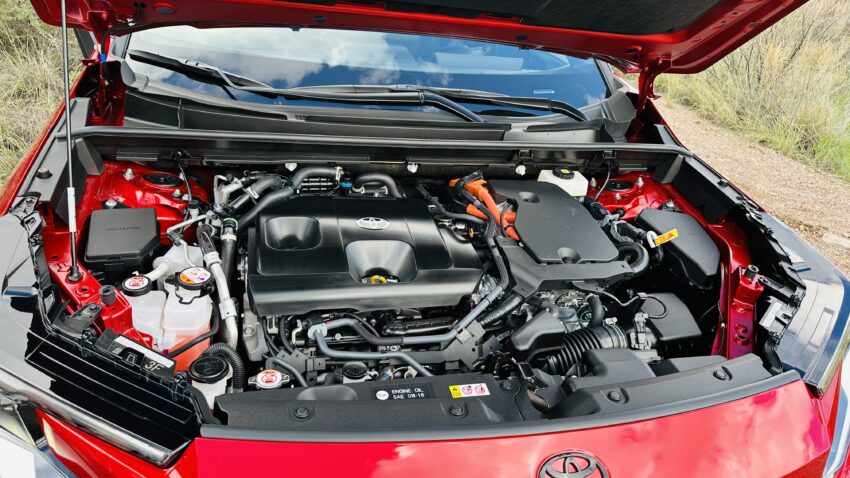
PHEV versions of the 2026 RAV4 boast total system output of 324 hp, up from 302 hp in the fifth-generation models. The gas engine’s output increases slightly from the conventional hybrid’s – to 186 hp and 173 lb.-ft. The AWD system’s front electric motor is rated 203 hp and 201 lb.-ft., while the rear motor kicks in with an additional 91 lb.-ft. of torque.
Toyota’s electronic AWD system is biased toward front drive, activating the rear motor to drive the rear wheels only when the system senses the additional traction is needed.
Pricing
Toyota has sorted a dizzying array of 2026 RAV4s – there are a dozen iterations – into three grades with a total of seven trim levels, three with conventional hybrid only, three with hybrid as the standard powertrain and plug-in hybrid as an option, and one with PHEV only.
Pricing won’t be disclosed until closer to the on-sale dates- end of 2025 for the conventional hybrids, early-ish 2026 (probably between March and May) for the PHEVS.
The company did say, however, that the 2026 RAV4 will start in the “low” $30,000s for the base front-wheel drive, conventional hybrid trim. We expect pricing to run from about $34,000 to just over $52,000.
A riot of RAV4s
To help keep things sorted out as we move along, here’s the lineup:
Core – LE, XLE and Limited. These have front-drive as standard equipment with optional electronic all-wheel drive. All three are available only as conventional hybrids with 226 horsepower in front-drive configuration and 236 hp with all-wheel drive.
Rugged – This has just one model, the Woodland, with a single trim level for 2026. It is available only with AWD, but with both 236-hp conventional and 324-hp PHEV powertrains.
Sport – SE, XSE and GR Sport. The SE can be had with either conventional or PHEV systems and in front- or all-wheel drive. The XSE is AWD only but can be ordered with conventional or PHEV powertrains. The GR Sport is AWD and PHEV only and, despite its Toyota Gazoo Racing team influenced design and suspension, has the same 324-horsepower rating as the other PHEVs.
Batteries, Efficiency, and Charging
PHEV versions of the 2026 RAV4 get a 22.7 kWh battery pack with Level 1 (120-volt) and Level 2 (240-volt) recharging capability. The Woodland and XSE trims also have Level 3 DC fast-charging capability, although Toyota chose, for some reason, to continue using a CCS charge pot rather than switching to the NACS system developed by Tesla. A special adapter is needed to access Tesla’s popular and reliable Supercharger network.
For home and workplace charging (Level 1 or 2), the SE and GR Sport trims are equipped with a 7-kWH on-board charger capable of a full battery recharge in as little as 3.5 hours at 240 volts; the Woodland and XSE trims get 11 kW capacity good for a 2.5-hour battery charge.
For DC fast charging, Toyota says the Woodland and XSE trims need about 35 minutes to bring a 90% depleted battery back up to 80% of capacity.
The plugless conventional hybrid trims get a roughly 1 kWh battery that recharges from regenerative braking and from the engine acting as a generator. Toyota said the front-drive hybrids will deliver up to 48 mpg in the city, 42 mpg on the highway and 44 mpg overall.
The AWD hybrids are variously rated depending on trim and weight: 45 mpg city/39 highway/42 combined for the XLE and XSE trims; 44/39/42 for the Limited and 41/36//39 for the Woodland.
For PHEV versions, the SE and XSE are rated at up to 50 miles of all-electric range, the Woodland at up to 49 miles and the GR Sport at up to 48 miles.
With the battery depleted so they are running in standard hybrid mode, Toyota says the SE and XSE PHEVs should deliver up to 41 mpg combined city-highway fuel economy, dropping to 38 mpg for the Woodland and 37 mpg for the GR Sport.
On the road – and off
We got to try each of the three styles on a recent press preview in the in an around the Tonto National Forest just north of Prescott, Arizona.
As is usual with most automakers– unfortunately – Toyota didn’t bring an entry-level LE model to the party, instead showing off the more profitable upper trim levels the company hopes will account for the bulk of sales.
So, we drove the Core style’s Limited trim, the Woodland and the Sport style’s XSE and GR Sport (a new offering for 2026) trims.
Performance-wise, none provided really “Wow! moments when the accelerator was mashed – they all have more horsepower than ever, but the hybrid systems seemed tuned to favor reasonably impressive fuel economy over sheer gut-churning acceleration.
No matter, these RAV 4s will beat your RAV4 across the intersection without breaking a sweat.
More impressively, they out-handle previous generations and offer much better ride quality. No more apologizing for truck-like characteristics, the 2026 RAV4 provides a comfortable ride but with plenty of grip. Steering is a bit numb, but the new RAV4 goes where you point it with no fuss. Brakes are firm and linear – no mushy spots.
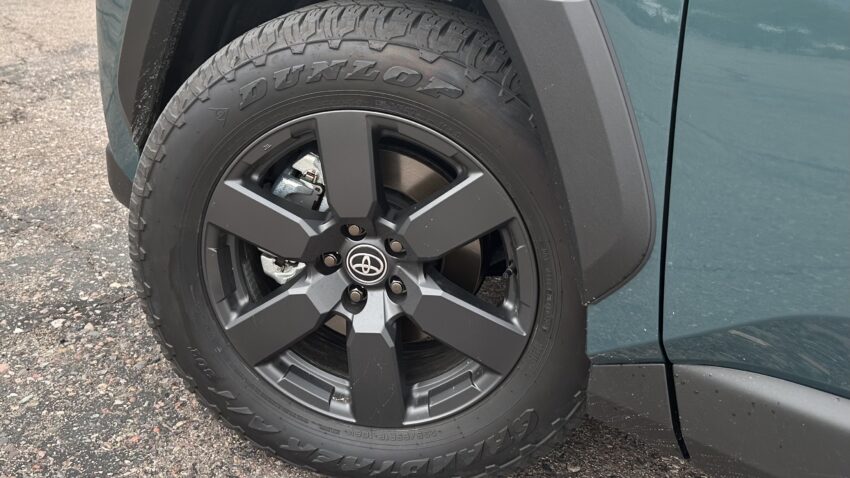
We were able to take the Woodland on a mild off-road course for a few minutes, mainly so Toyota could show off the trail mode with a hill descent control system courtesy of Subaru (Toyota owns a 20% stake and the companies share some all-wheel drive system development chores as well as select control software).
It felt sure footed on its stock 18-inch all-terrain tires on the loose sand and gravel and, with 8.5 inches of ground clearance versus 8.1 inches for all other trims except the GR Sport, clambered over a few moderately gnarly rocks and down a steep, rocky and rutted incline with aplomb.
But we suspect almost all the other 2026 RAV 4 variants – save the 20-inch summer-tire clad GR Sport with an inch less ground clearance – could have handled the same route although without benefit of the computer-controlled hill descent system to handle steep downhill braking.
Much of the available drive time was on a stretch of Arizona’s Highway 87, which climbs about 1,600 feet in the 50-mile stretch we drove. Both the conventional and plug-in hybrids handled elevation changes – there were a few quite steep sections on the route -with no sign of exertion.
There were intermittent showers on drive day, so we experienced the new RAV4s on dry and wet pavement and found each version quite capable of handling both.
The front-drive version didn’t try to pull us off-road when we pushed it into curves and the AWD versions – optional on the Core trims and standard on the others – were sure footed in both wet and dry conditions.
Generally, the redesigned cabins were more upscale than in past RAV4s and more quieter, as well – thanks to improved noise attenuation throughout
Toyota’s aluminum 2.5-liter in-line four still gets a bit noisy when full output is demanded, though. Thankfully, it is less high-pitched and shrieky, than in the 5th generation RAV4s sold from 2019 through the current model year.
Start your trip in a fully charged PHEV version of the 2026 RAV4 and lock it into all-electric mode and you’ll enjoy a quiet ride in almost all conditions (nasty road surfaces generate noise no matter what) for the first 40 to 50 miles of any trip.
2026 RAV4 Redesign
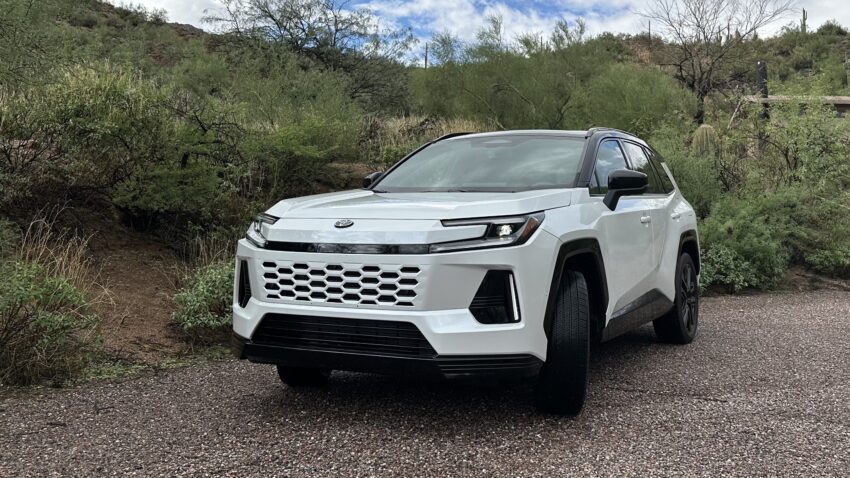
The new RAV4 retains a familiar silhouette with a relatively upright greenhouse, high belt-line, and chunky wheel arches. But the detailing is sharper and a little less angular thna in the fifth generation with chiseled door panels, stronger character lines, wider haunches and more pronounced over-fenders.
The Core trims adopt paint-matched surfaces, more subtle cladding, and wheel sizes ranging from 17 to 20 inches, depending on grade.
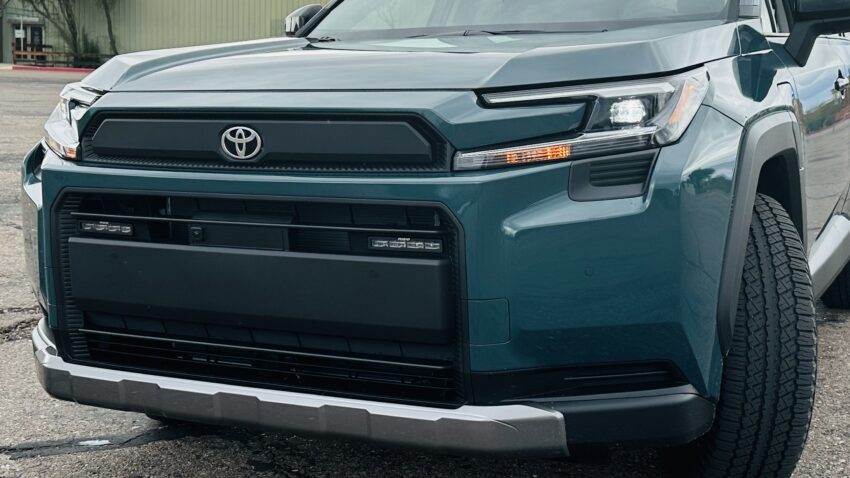
The Woodland trim introduces aggressive off-road styling with raised roof rails with crossbars, blackened brightwork and all-terrain tires and extra cladding.
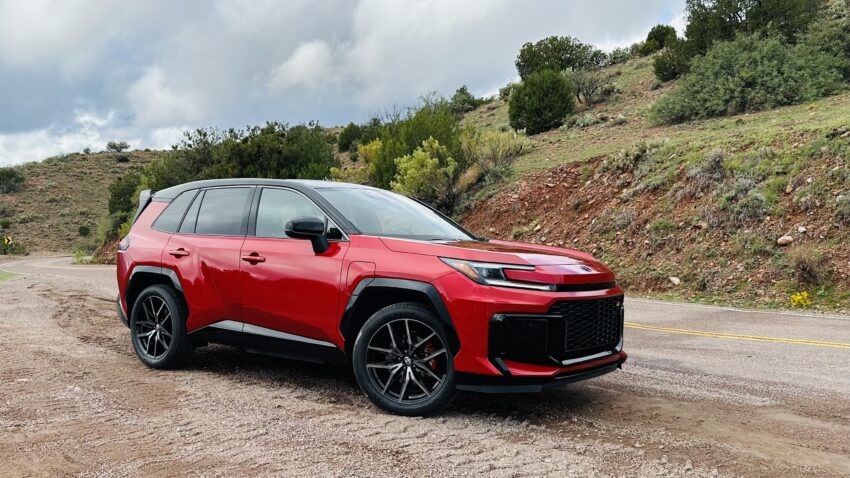
The Sport trims are styled for a performance-look with sporty wheels, unique rear spoilers, a more aggressive stance and even a few two-tone color options.
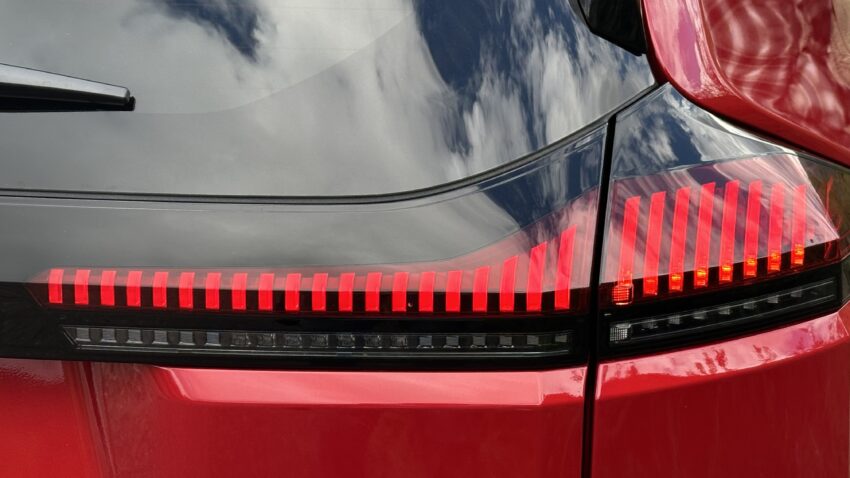
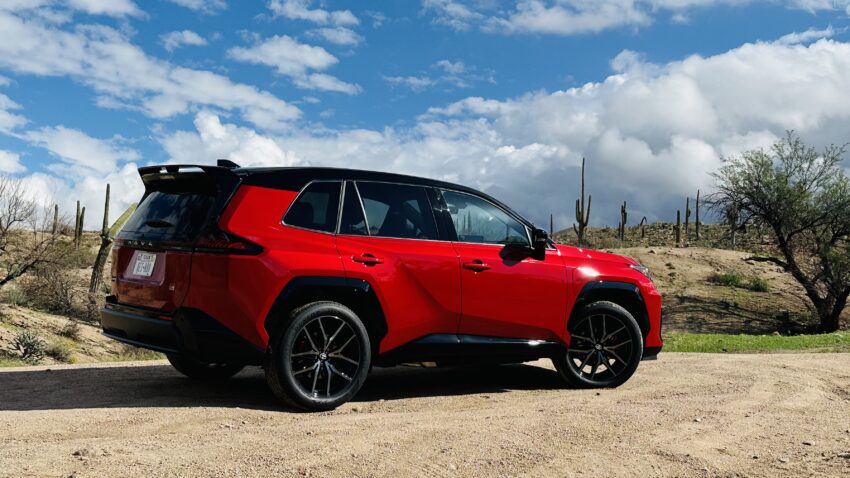
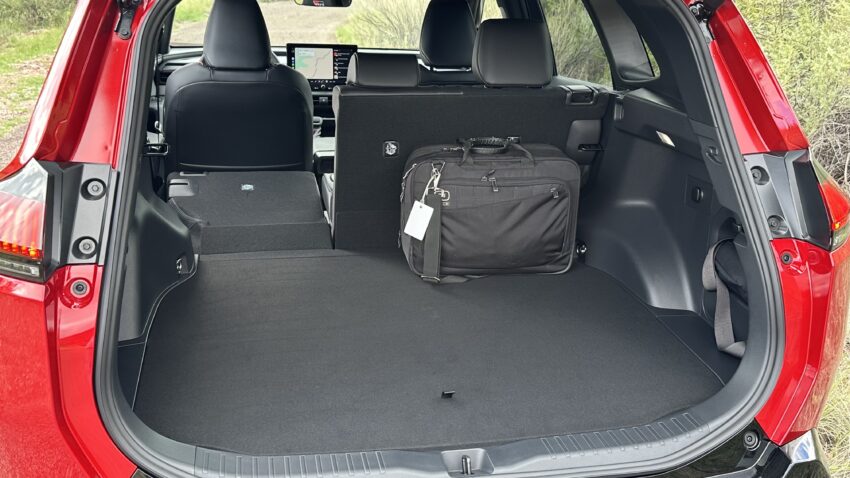
For all grades and trims, the rear features new thin linear LED lightbar-style tail lights. The tailgate remains tall and practical, but with cleaner surfaces, less plastic cladding and optional spoilers to boost visual appeal.
Key features of the 2026 RAV4s
Toyota’s designers stepped away from the sharp angles and creases that made the fifth-generation RAV4 stand out. The redesign gives the 2026 RAV4 a boxier shape. That doesn’t mean it doesn’t have character – it does – but it won’t stand out quite so much in a parking lot full of competing box-shaped crossovers and SUVs.
Because all are electrified to one degree or another, Toyota chose to put an EV-style flat nose on the 2026 RAV4. The slightly scowling face of the previous generation RAV4 is gone, replaced by a more rectangular grille, body-color on some trims, satin or piano black on others and with varying grille opening patterns, depending on trim level.
Wide fender and rocker panel moldings are part of the package, along with a belt line that Toyota described as “ascending.” It’s a chiseled line that rises from down near the bottom of the front door and rises up to the base of the D pillar at the rear. There’s also a swooping belt line that gives the new RAV4 wide haunches and- in profile – front fenders that stand out from the body a bit.

There’s a roof-mounted rear spoiler on most trims, body colored for some, black for others, and a full-width rear LED lightbar.
All but the Woodland get low-profile roof rails – the Woodland gets raised rails with integrated crossbars.
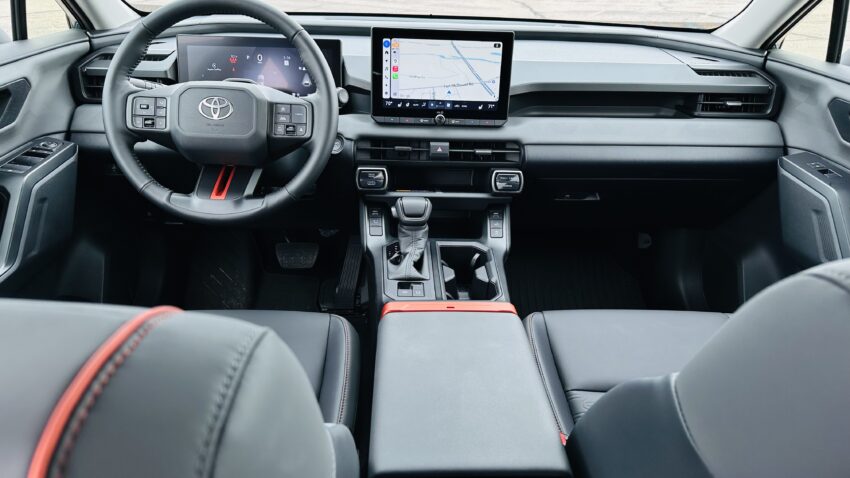
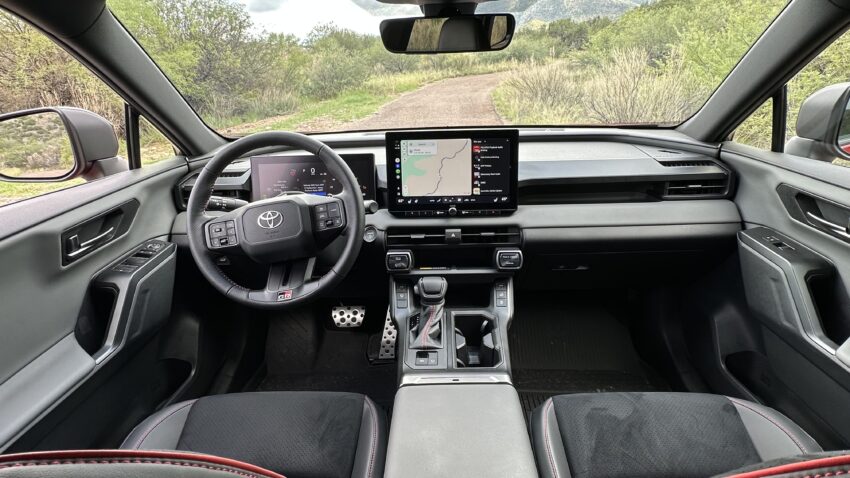
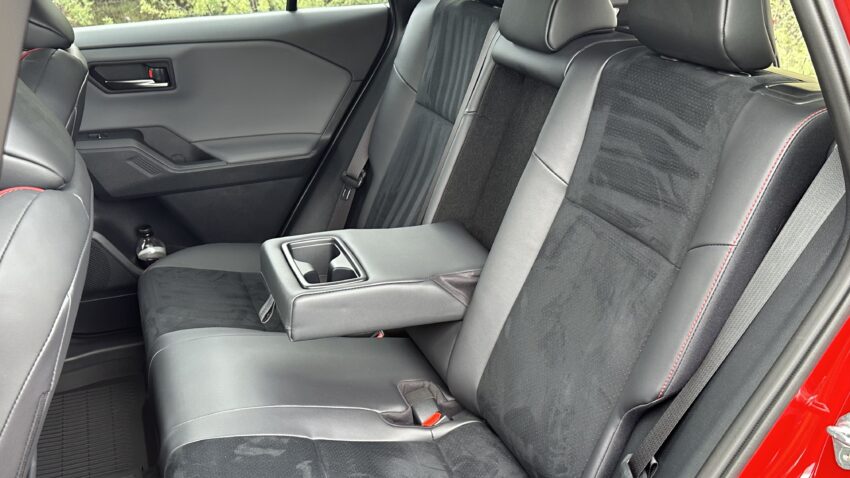
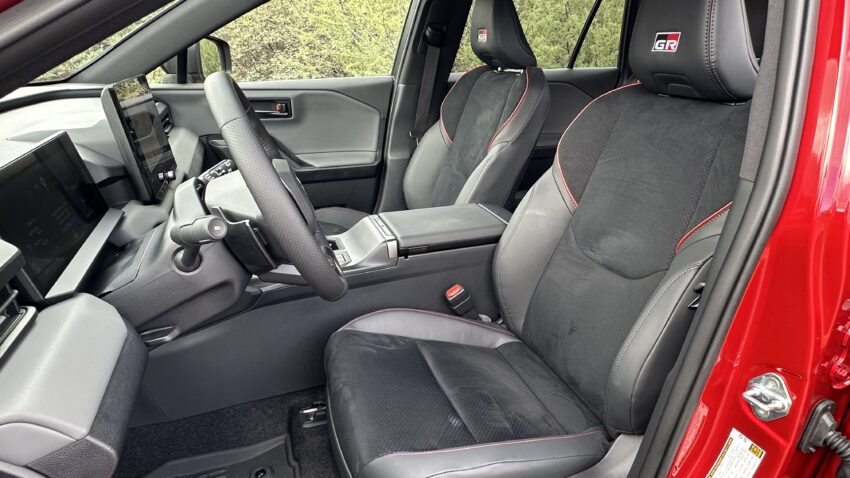
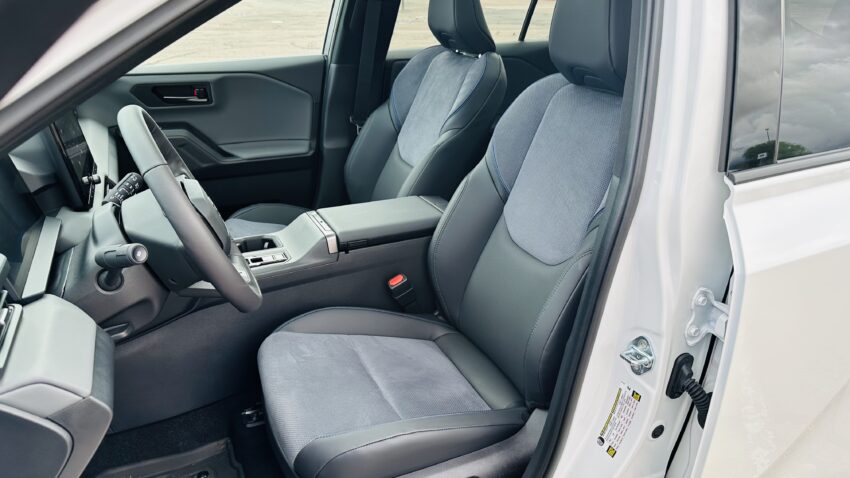
Inside, each grade gets distinctively styled seats and upholstery trim and contrast stitching. The Woodland also gets a sort of red-orange metal trim on the center console and steering wheel. The Woodland also gets 18-inch all-terrain tires and a trailer hitch, as well as a 360-degree camera system that can be aimed to low in front to show off-roading obstacles – such as ruts and rocks – that may not be visible from the cockpit.
Other RAV4 features include:
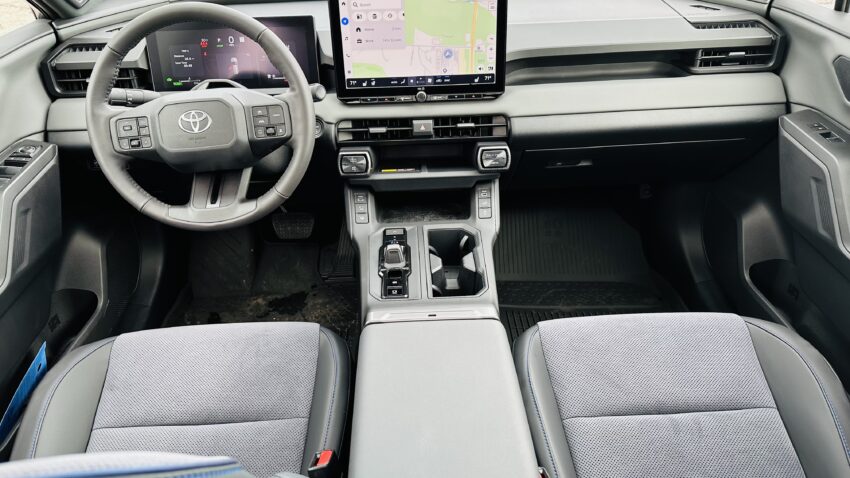
- A 10.5-inch touchscreen is standard on the LE, XLE, SE and Woodland trims, up from 8-inches. The Limited, XSE and GR Sport trims get a 12.9-inch touchscreen, up from 10.5 inches.
- All trims get a new 12.3-inch digital driver info cluster, up from 7 inches with mechanical gauges.
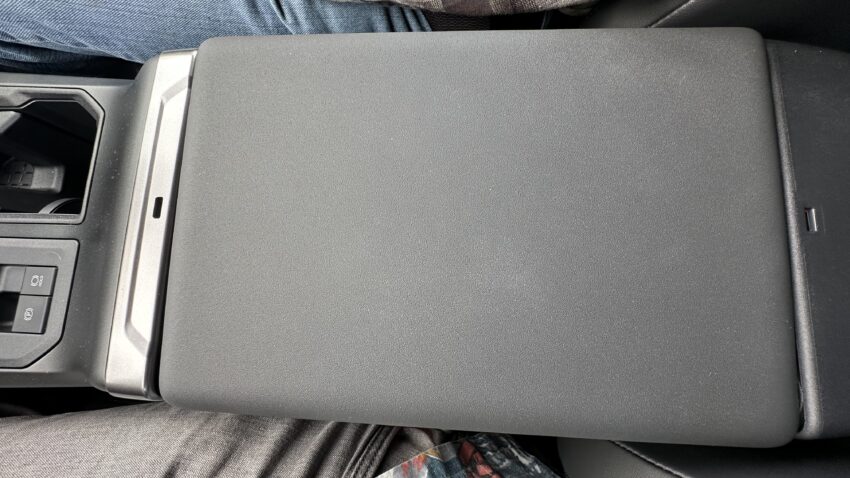
- Controls for the heating and cooling system are now integrated along the bottom of the large touchscreen display, and there’s a permanently displayed home button that’s visible and functioning even when the wireless y connected Apple CarPlay or Android Auto is in use.
- The Limited and XSE trims can be ordered with a head-up display.
- Trims with native navigation will be able to display maps and directions on both the touchscreen and on the driver information screen.
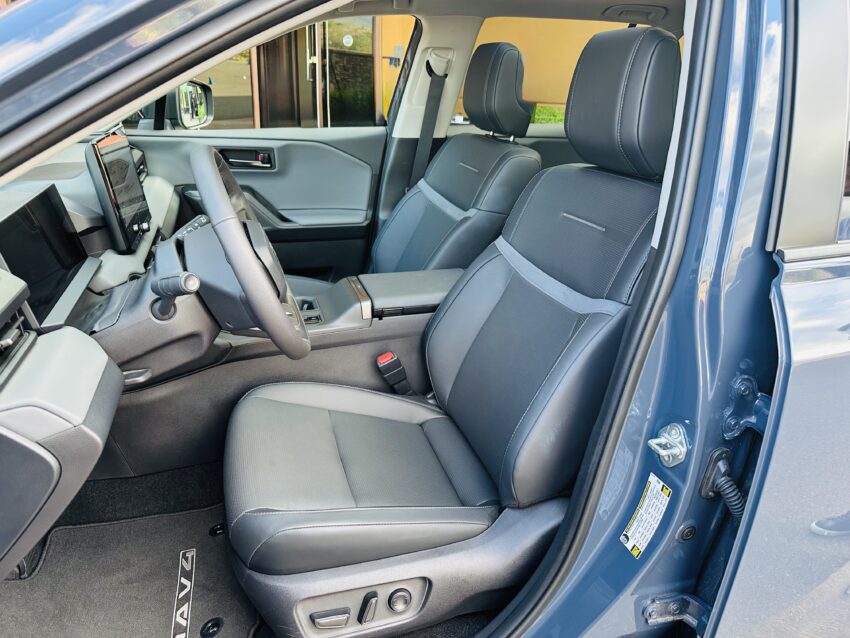
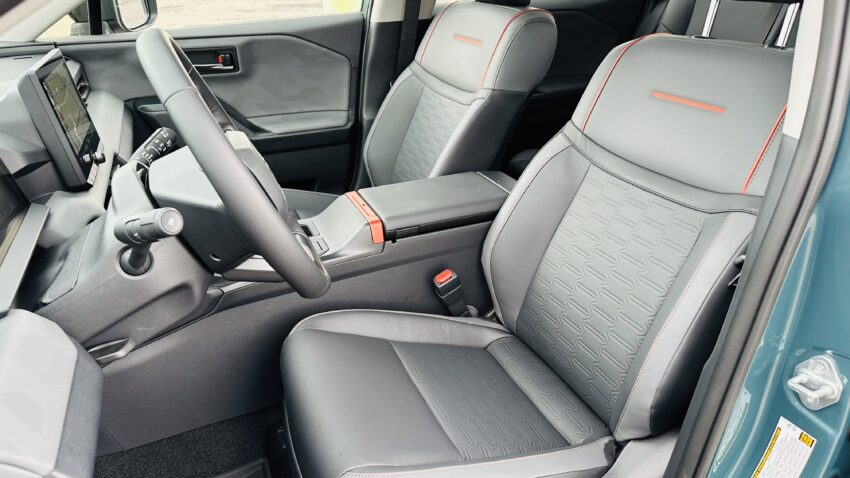
- The standard audio remains an unbranded 6-speaker system, while a JBL Premium nine-speaker system is standard for the Limited and an option for the XSE trim.
- The 2026 RAV4 marks the launch of Toyota’s new Arene software development platform that enables the next-generation Toyota Safety Sense 4.0 suite of advanced safety and driver assistance systems as well as the next generation Toyota Audio Multimedia (infotainment) System.
- All but the base LE trim get heated front seats.
- The Limited and XSE trims also get ventilated front seats.
- XSE and GR-Sport trims get perforated Ultrasuede upholstery.
- Exterior color choices include nine solids and, for the XSE and GR Sport trims only, four two-tone options.
GR Sport specifics
The GR Sport, a new model for the RAV4 lineup and the first Toyota crossover in the U.S. to wear the GR badge, doesn’t get and more power than other PHEVs in the 2026 RAV4 lineup, but it does gets number of unique features to support its role as the sportiest of the RAV4s.
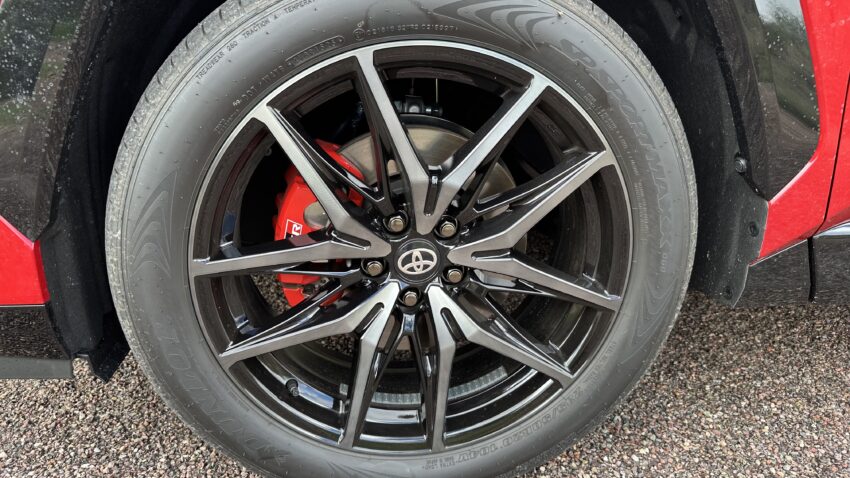
There’s the obvious, such as 20-inch lightweight alloys with sticky summer tires (right), an inch-lower ride height (7.5 inches of ground clearance), a unique grille and top-mounted spoiler and a special GR steering wheel, sport seats, paddle shifters and aluminum pedals.
But the Gazoo Racing division also gave the GR Sport its own trhrottle and steering mapping, specially tuned suspension, reinforced bracing, wider front stance and a front sway bar with a damper.
The “A” pillar and tailgate opening frame – or rear ring – were reinforced for increased body stiffness (sometning that the other trims got as well) and a few bits of aero treatment were added, including a front lip spoiler, a rear diffuser and lower rear suspension arm covers. The front wheels were pushed out a bit to widen the front stance by three-quarters of an inch.
The result – from our admittedly short driving experience – is a RAV4 with a confident, balanced ride, firm steering and slightly aggressive good looks.