

We were impressed with the redesigned Toyota bZ small electric crossover when we tested it last year: Its slightly larger sibling, the new 2026 bZ Woodland, is equally impressive, although not substantially more useful despite its off-roading pretensions.
The biggest benefits of the Woodland – Toyota insists it is its own model and counts it as number three in the company’s EV family along with the regular bZ and the new C-HR crossover-coupe – are that it has more cargo space and more horsepower than the standard bZ.
Oh, and two-tenths of an inch more ground clearance, along with the no-cost option of all terrain tires, which make mudding easier but rob it of 21 miles of range.
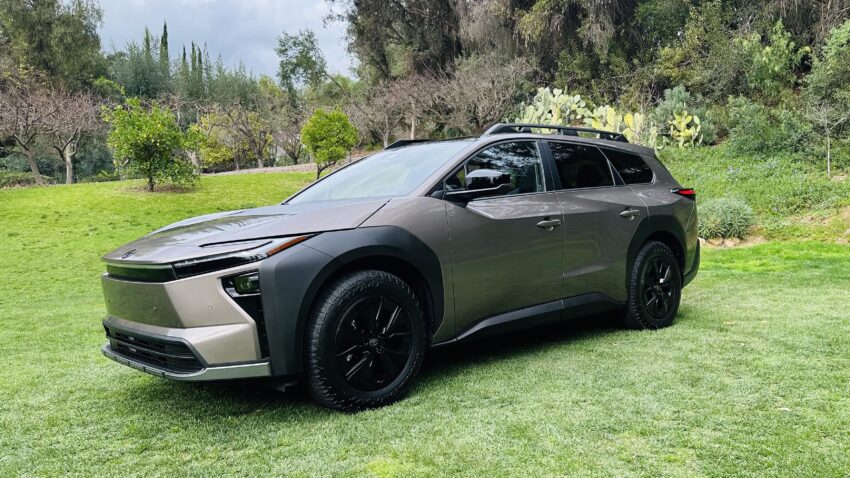
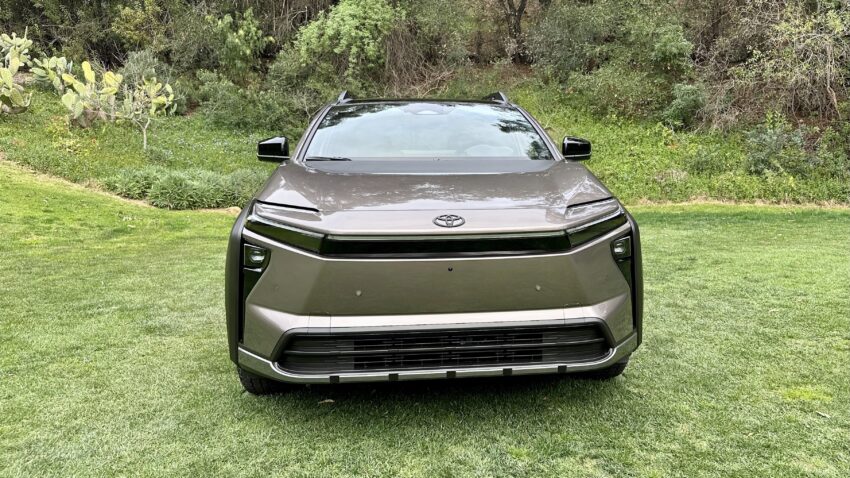
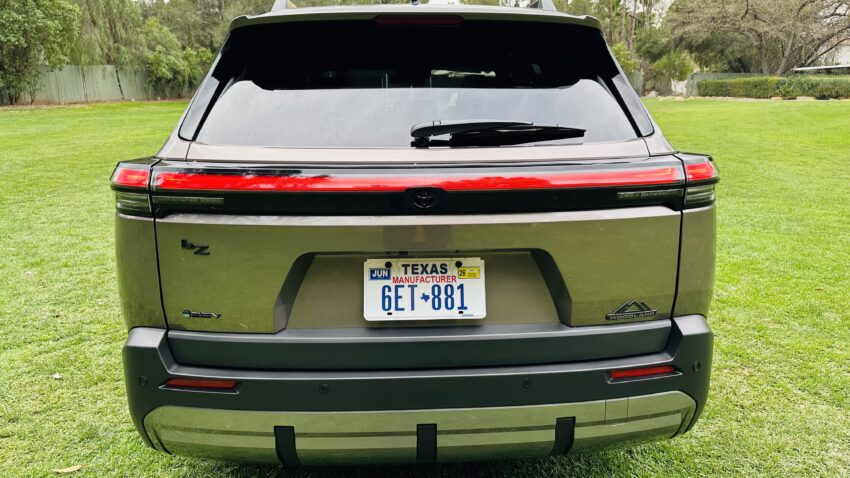
Still, with its matte black cladding and blacked-out wheels, the bZ Woodland has the kind of rugged good looks that many find attractive. It provides a comfortable ride, neck-snapping acceleration, lots of nice features and it can tow, stow and go in the snow – courtesy of the X Mode system developed by Subaru.
The 2026 bZ Woodland, in fact, is Toyota’s version of the Subaru Trailseeker; the result of an EV collaboration between the two companies. Toyota is a major investor in Subaru and Subie in turn is a member of the Toyota Group.. Despite their sorta different exteriors, the two share the same co-developed platform, Toyota’s battery and electric drive systems and Subaru’s world-class all-wheel drive system with traction and control-bolstering X-Mode.
All-wheel drive versions of the regular bZ, however, are less costly and also have X-Mode and can be fitted with all-terrain tires at any decent tire shop. You don’t get the “I’m tough” cladding, but they are almost 6 inches shorter overall than the Woodland (more maneuverability) and they have the same 122.2-inch wheelbase and the same passenger cabin dimensions. although the Woodland’s rear seating area is a little roomier thanks to a slightly higher roof back there.
that extra inch of roof height and the he bZ Woodland’s extra length really make themselves felt in the cargo bay, which provides for an additional 6 cubic feet of storage. The outdoorsy crossover’s boosted power also gets it a light-load tow rating that U.S. market models of the regular bZ don’t have.
Toyota dealers will start taking delivery of their bZ Woodland allocations in March.
The bZ Woodland driving experience
We had the opportunity to drive the 2026 bZ Woodland recently in and around Ojai, Calif., an artsy, bohemian community in a coastal mountain valley just inland from Santa Barbara.
We liked what we were able to experience, but we were there as part of a Toyota-sponsored media group and had the bad luck of a heavy rainfall the night before our driving day. The result was the the off-road area we were supposed to use to sample the bZ Woodland’s prowess was a sea of slick, clingy mud. It took a day to dry out – sort of – and the part that featured various obstacles and barriers for us to overcome remained closed.
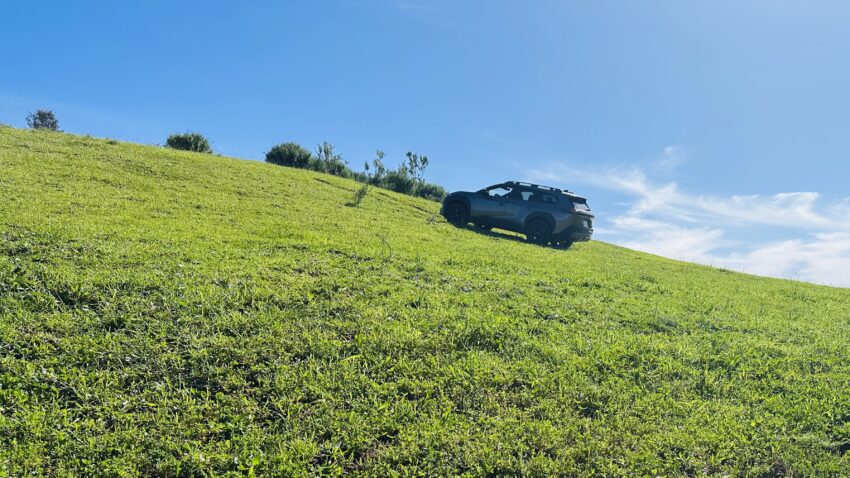
All we were able to do was drive a steepish, rutted but no longer very muddy dirt trail up from the highway to near the top of a cattle ranch once owned by the late Paul Walker of Fast & Furious fame. That was accomplished with the ease of a quick trip to the supermarket. At the top (or as close as we were allowed to go) we were able to experience the X-Mode system’s crawl control by letting it haul us up a wet, slippery, grassy hill with no driver input and without spinning the tires.
Still, despite its rugged looks and the no-cost option of all-terrain tires (with a highway-friendly, mildly knobby tread pattern), the bZ Woodland’s ground clearance isn’t world class. At 8.4 inches it is just two-tenths of an inch more than the standard bZ’s. Most off-road experts recommend a minimum of 8.5 inches for uneven and rocky terrain.
The bZ Woodland’s 40-foot turning circle is average for a crossover of its size, but doesn’t make for easy maneuvering in tight spots on a trail.
On the plus side, ride quality was great and the suspension absorbed bumps and ruts without jarring our fillings loose,
All in all, we found the Woodland and best suited for gravel and dirt trails when heading off the asphalt.
On that asphalt, the bZ Woodland offers a very comfortable ride. Bumps and potholes disappeared, even when we drive a model mounted with those all-terrain tires. In fact, the all-terrain tires seemed to provide a more comfortable ride than the all-season tires, and if it weren’t for the range penalty they’d by our choice for everyday rubber on this Toyota.
The cabin was quiet, albeit a little quieter with all-season tires, and the electronic all-wheel drive kept the Woodland on the road and pretty effortlessly going where it was pointed even when cornering at a bit more speed – on wet pavement – than the road signs suggested was allowable.
With 375 horsepower under the hood (well, half was under the hood – in the electric motor on the front axle – the rest was under the rear cargo bay in the electric motor on the rear axle), climbing hills and passing presented no difficulties, and the driver assistance systems embedded with Toyota’s Safety Sense 3.0 package helped us stay between the lane markers and let us follow on a fast-flowing freeway with our feet resting on the floor instead of pressing accelerator and brake pedal incessantly.
Speaking of brake – the bZ Woodland does have regenerative braking – four levels of it. But as is Toyota’s somewhat sadistic wont, it doesn’t have one pedal driving that will allow the regenerative system to bring you to a complete half; it creeps along at 2 mpg, forcing you to hit the break pedal at stops.
Regenerative levels are set by pulling on steering wheel mounted “shifter” paddles, and the Woodland won’t remember what you set it at when you power down – another Toyota quirk we don’t particularly care for. Drivers have to reset the regen every time they hit the “start” button.
There are two drive modes – normal for everyday driving and eco to help maximize range by toning down throttle response and heater output. When off-road or dealing with ice, snow or mud in areas where low speeds make the most sense, X-Mode becomes a de facto third mode, but it deactivates at speeds above 18 mph, so isn’t much help on the open road.
Trims and pricing
The 2026 bZ Woodland comes in two trim levels: base and Premium. The share the same power- and drive-trains The base AWD trim starts at $46,750, including the mandatory destination fee of $1,450. The Premium – which adds some creature comforts but nothing in the way of power or utility – starts at $50,300. Toyota hasn’t yet published a list of options and add-ons, so we don’t know yet how much more you could spend before getting out of the dealership if budget isn’t a constraint. The standard bZ tops out at $44,750 in Limited trim – just below the Woodland’s starting point.
Power and drivetrain
Both 2026 bZ Woodland trims come with dual-motor, electronic all-wheel drive systems and are rated at 375 horsepower and nearly 400 lb.-ft. of torque. That compares to 338 hp and 323 lb.-ft.for the all-wheel drive bZ.
The system is biased toward front drive, for efficiency, and can apportion torque between front and rear wheels as needed for traction. The ABS system is used to help control wheel spin from side to side – there is no torque vectoring.
Toyota says the bZ Woodland can deliver a 0-60 mph sprint time of just 4.4 seconds.
Battery and charging
The Woodland has a 74.7 kWh battery and uses a Tesla-style North America Charging Standard (NACS) charging port, requiring an adapter for other types of chargers. The on-board charger for 120- and 240-volt home and opportunity charging is rated at up to 11 kW per hour and can refill a depleted batter on properly sized Level 2 equipment in about 7 hours.
Toyota supplies both a NACS-CCS fast-charging adapter and a dual voltage – 120/240 – portable c charging cord as standard equipment for the bZ Woodland.
For DC fast charging, the bZ Woodland is rated at up to 150 kW with a 10%-to-80% recharge time of about 30 minutes in optimal conditions.
Range
Official EPA ratings haven’t yet been published, but Toyota’s in-house estimates are 281 miles for either trim with all-season tires, and 260 miles with the knobbier, grippier all-terrain tires. For comparison, the standard bZ with all-season tires and all-wheel drive ranges from 278 miles to 288 miles depending on trim level.
Cargo capacity,towing
The bZ Woodland beats its citified stablemate in this category because of its longer rear cargo area. Toyota rates the bZ Woodland at 33.8 cubic feet behind the second-row seats and 74.3 cu. ft. with the second-row folded. The regular bZ has 27.7 cu. ft. behind the rear seats and 56.9 cu. ft. with the rear seat backs folded down. A standard grocery bag needs about one cubic foot while the average airline carry-on bag takes up about two cubic feet.
The Woodland’s seats backs don’t fold completely flat though, making for an uneven cargo floor when they are folded down. There’s also a fairly large gap between the backs of the front seats and the start of the cargo floor with the second row folded. It’s a good place to store coats and backpacks, but when empty it can be a pit into which loose pieces of cargo can tumble when the brake pedal’s mashed.
For loads too big, or messy, to haul inside, the Woodland comes with roof rails – you’ll have to go accessory shopping for the cross bars and cargo carriers, though – and is rated to tow up to 3,500 pounds. That’s in Cadillac Lyriq, Tesla model Y and BMW iX territory.
Standard features on the base bZ Woodland include:
- 18-inch wheels and all season or all-terrain tires (buyer’s choice)
- Full LED exterior lighting
- Roof rails
- Hands-free rear liftgate
- Heated, power-adjustable front seats
- 60/40 split folding rear seats with heated outboard positions
- Heated steering wheel
- Faux leather (SofTex) upholstery in brown or black
- Steering wheel paddles for regenerative braking settings
- Heated, power-folding side mirrors with turn sign and blind spot warning indicators and puddle lamps
- Dual-zone climate system
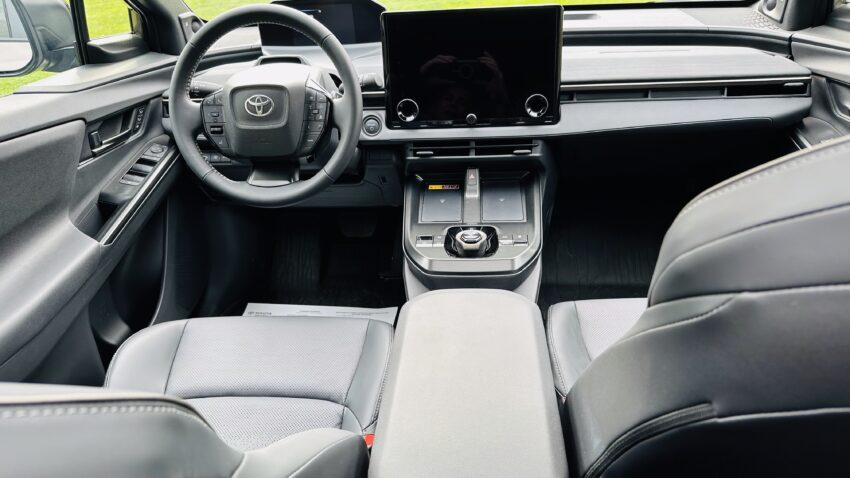
- Dual wireless charging pads
- 7-inch digital driver’s information display
- 14-inch touchscreen with 6-speaker audio and wireless Apple CarPlay and Android Auto connectivity
- Four USB-C charging ports; two with 15 watts for front seating area and two with 60 watts for rear seating area
- Customizable interior ambient lighting
- All-weather floor and cargo mats
- Blind spot monitoring
- Front and rear parking assist with automatic braking
- Toyota Safety Sense 3.0 with full-range adaptive cruise control, front collision mitigation with pedestrian detection, lane following and lane departure warning with steering assist,
The Premium trim adds:
- A fixed glass roof
- 9-speaker JBL sound system
- Ventilated front seats
- Driver’s seat memory
- Side mirror memory and reverse-tilt function
- Radiant heating in front seating area for feet and legs
- Digital rear view mirror with HomeLink.
We’ll be back with more – especially a look at how close to realistic Toyota’s range estimates are, once we get a chance to spend more than a few hours behind the wheel of the 2026 bZ Woodland.
To facilitate this review, thegreencarguy attended a sponsored program with food, lodging and travel provided by Toyota.
gg