

Bye Bye, ZDX
Well, that was quick. A year after introducing the electric ZDX crossover, Acura is canceling it.
Word of the Acura ZDX’s demise – it is actually the second time around for the nameplate, but the first was an internal combustion model built from 2010-2013 – comes just days before the federal tax incentive program for EVs ends under a Republican-backed bill approved this summer.
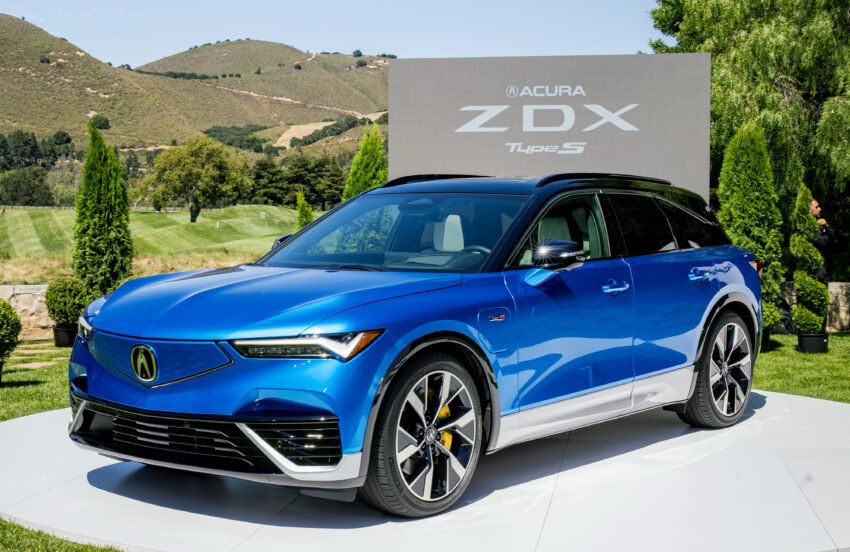
Shoppers never really warmed to the electic ZDX, which was built on a General Motors platform under a short-lived joint -development program that also gave Honda – Acura’s more mainstream sister brand – the electric Prelude crossover (which isn’t being canceled, at least not yet).
Like the Prelude, the ZDX is built on a platform shared with a number of GM ‘s all-electric crossovers including the Chevy Blazer EV and the Cadillac Lyriq. It actually is built in the same plant at the Lyriq, and likely one of the turnoffs for a lot of Acura fans is that a lot of its switchgear and drivetrain bits cam from the GM parts bin.
There are some bargains to be had while Acura tries to clean out the remaining unsold 2025 ZDX models, but they’ll be relatively hard to find as Automotive News recently reported that there are fewer than 200 ZDX models sitting dealer lots across the country. for those few, though, Acura is offering a $4,000 discount on top of any local EV incentives. Because it is built in the U.S. and uses a GM battery, the ZDX also qualifies for the federal incentive of $7,500 for a few more days, until the federal program ends at midnight, Sept. 30.
Acura plans to follow the ZDX with another all-electric crossover, the RSX (another revived namplate formerly used for an ICE). This time, though, it will be all Acura, built on a platform developed in-house at Honda to be shared bty the Honda and Acura brands. The RSX is expected to debut as a 2027 model, possible late in 2026.
Jeep Axes Gladiator PHEV
Stellantis, parent of Jeep, Chrysler, Dodge, Ram and other brands, has never been a fan of electrified vehicles but has brought a few to market, including the plug-in hybrid Jeep Wrangler 4xe. It also had planned to do a plug-in hybrid (PHEV) version for 2026 of the Jeep Gladiator pickup, but that is now officially dead.
The Gladiator 4xe was dropped because of those ever-changing market conditions – slowing EV sales, increasing production costs, weakening national economy and etc. – that affect, and rightfully so, lots of production decisions in the automotive world.

Add to that slowing sales of the regular (ICE) Gladiator aren’t doing all that well. Annual sales last year were down more than 50% from a 2021 peak of just under 90,000 and they’d fallen again in the first quarter of this year. So, it’s easy to see why Jeep is saying it would rather devote its budget to bolstering the existing Gladiator ICE with new and improved features that on introducing a new, electrified variation – especially as federal tax credits that might have boosted showroom traffic are ending this month.
Of interest, though, is that the Wrangler 4xe has been the best-selling PHEV in the U.S. since 2022. And even though it lots its federal incentive eligibility at the start of 2025, the plug-in Wrangler still accounted for 26% of all Wrangler sales in the first three months of the year.
The difference, of course, is that the Wrangler in general does well in the market, while the Gladiator is slumping. So investing in a electrified version, especially in the face of both corporate and federal government antipathy toward EVs right now, just didn’t make sense to Jeep’s bean counters.
And More…
Acura and Jeep aren’t alone. Most automakers selling EVs in the U.S. are reevaluating their electrification plans these days, with some canceling some models and postponing the planned introduction of others as they wait to see who market conditions will shake out. Among them:
- Audi has canceled the RS6 e-tron.
- Nissan dropped the Ariya EV from its 2026 model-year lineup in the U.S. and also has canceled plans for a pair of electric sedans for the U.S. market – one for the Nissan brand and one for Infiniti.
- Polestar is delaying introduction (and thus, production) of the Polestar 6.
- Ford, Toyota and Honda have canceled or delayed plans to build three-row electric crossovers.
- Maserati canceled the MC20 Folgore electric supercar.
- Ferrari is delaying launch of its second EV til 2028., citing “zero” demand for another high-performance EV right now.
- Tesla discontinued the rear-wheel drive version of the Cybertruck.
Not All Is Bad News
It’s certainly not the end of the EV world, though. EV sales have continued to grow even though the pace of that growth started slowing in 2024 and into the first half of 2025. Things exploded recently, though, as it became apparent Congress was going to kill the federal tax credit program that has helped boost EV and PHEV sales for more than a decade.
The GOP-backed budget reconciliation bill that was passed along party lines earlier this year set Sept. 30 as the final day for the program and shoppers moved en masse to take advantage while they could.
Cox Automotive, which tracks these things, is forecasting that the third quarter of 2025 will be a record-setter for EV sales with a 21% increase form the same period last year – to a total of 410,000. That’s also 30% more than in the second quarter of 2025.
Cox said it expects EV sales to slow “notably” in the fourth quarter but for long-terms sales growth of electric vehicles to continue.