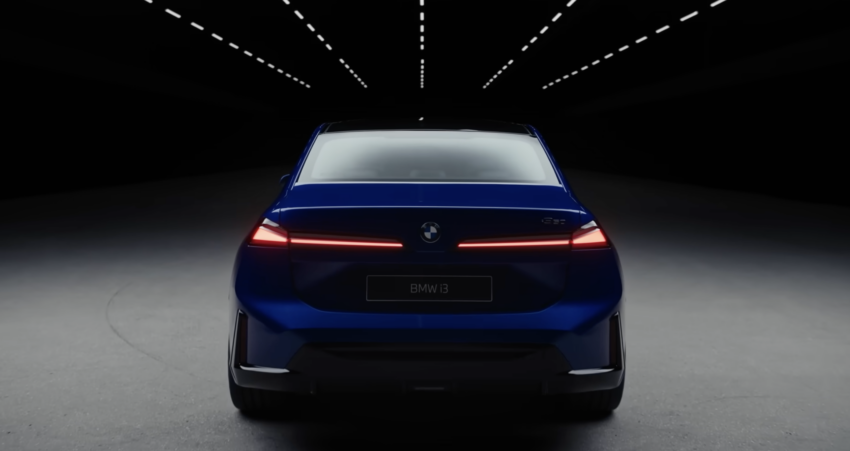
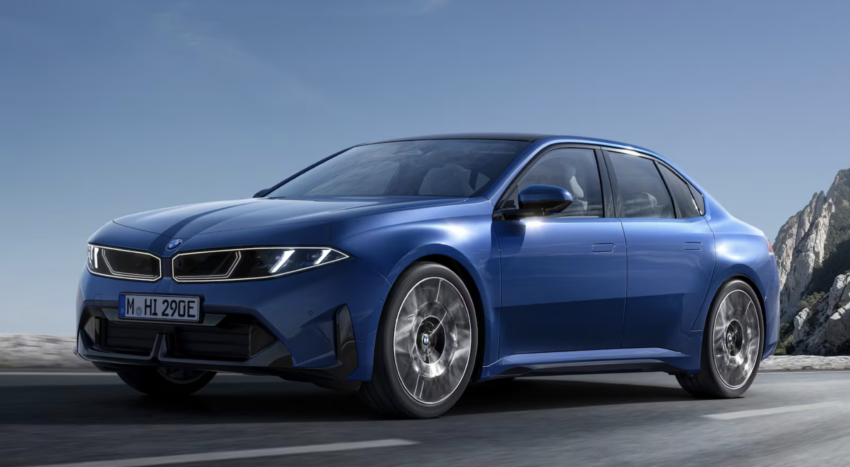
Other automakers may be dialing back their EV plans, but BMW is forging ahead, with the 2027 i3 electric sedan slated to begin production in August. The electric member of the 3-Series family is BMW-rated at up to 440 miles of range.
The small sedan will launch early next year with the dual-motor, all-wheel drive BMW i3 50 xDrive rated at 463 horsepower and 476 lb.-ft. of torque. That will be the second-most powerful member of the 3-Series family, which is now topped by the 523-hp M3.
Pricing hasn’t been set, but we expect it to come it at around the $60,000 mark – give or take a few thousand – and there should be a less-expensive, single-motor rear-drive version to follow.
Don’t get this i3 mixed up wit the original, a subcompact electric city car sold from 2013 til 2022. That i3 was built largely of of carbon-fiber and high impact plastics and featured a tall-roof hatchback design with suicide door in the rear. It was sold either as a pure EV or with an optional two-cylinder “range-extender” gas engine-generator lifted from BMW’s motorcycle shop.
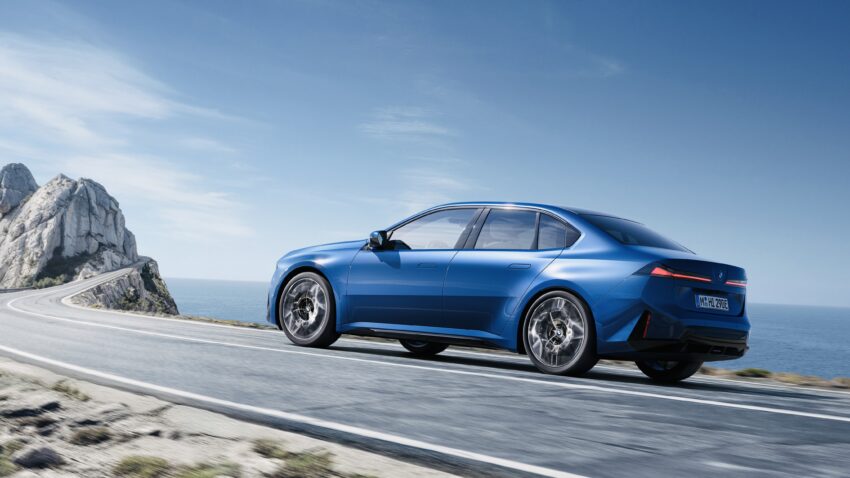
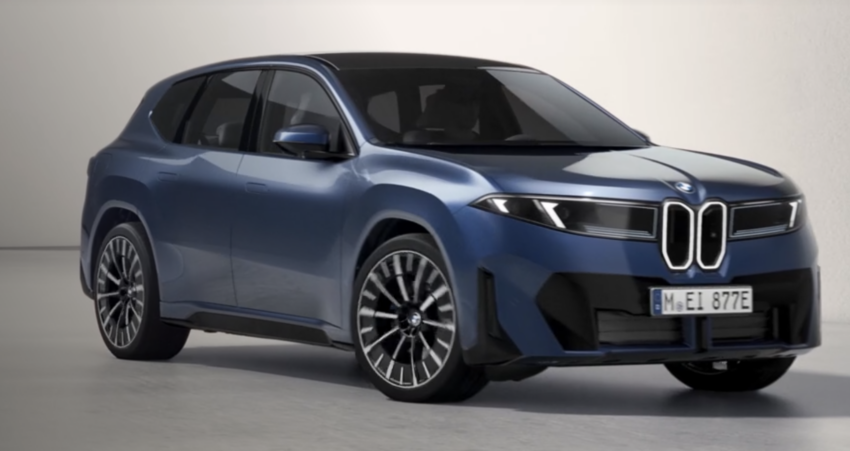
The 2027 i3 sedan is a true BMW sports sedan and the second vehicle on BMW’s “Neue Klasse” (or New Class) EV platform, following the iX3 SUV already on sale in Europe and scheduled to hit U.S. dealerships by or before the middle of 2026.
Because it uses the same platform, the i3 shares the iX3’s powertrain and electronics package, with suitable modifications to work in a sedan’s packaging.
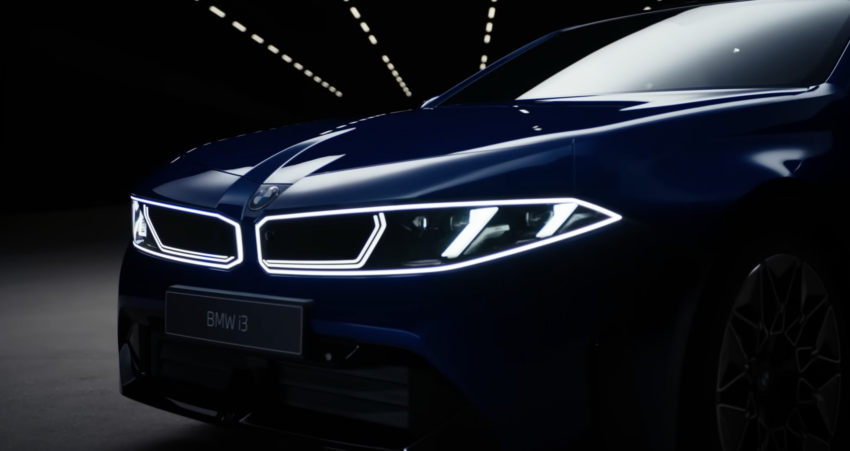
It also shares a lot of the same design language, with sedan-accommodating modifications – thank the gods of auto styling! The i3’s long, low hood, short tail, low roofline and familiar Hofmeister Kink all shout “BMW.” And the sedan sheds the vertical kidney grille that looks like a pasted-on afterthought on the iX3 and presents a rather pleasing face with a narrow, racy-looking grille- still kidney-shaped – stretching horizontally across the nose and flanked by LED headlamps.
Battery and charging
The Neue Klasse platform has a new battery pack design that uses cylindrical cells instead of flat pouches and eliminates the need to package the cells in modules and using the modules to built the pack. The cell-to-pack system reduces weight and complexity and improves energy density. The automaker hasn’t released i3 battery capacity information, but it is likely close to if not the same as that 108 kWh of usable energy that gives the chunkier and presumably heavier iX3 SUV a BMW-estimated 400 miles of range.
The i3 also features an 800-volt electrical system that permits DC fast-charging at up to 400kW -good for a BMW-estimated 200 miles of range, or a roughly 50% recharge, in just 10 minutes when the charging stars are aligned.
As is the case with most new EVs, the i3 is equipped with a Tesla-style NACS charging port and comes with an adapter to enable charging at “other” stations that use the not-so-old CCS charging system and its proprietary connector.
The on-board charging system for Level 1 (1220-volt) and Level 2 (240-votl) home and opportunity charging is rated at a maximum of 15.4 kw per hour. adding about 60 miles of range per hour. To charge that quickly, though, requires a substantial home charging station and the requisite electrical service, rated at a minimum of 64 amps (most home appliance circuits are 15 or 20 amps). The i3 will charge on lesser-rated Level 2 equipment, just not as rapidly.
(All about EV charging) and (The lowdown on amps, volts and watts)
Bi-directional charging capability is standard on the i3. The the juice stored in its batteries can be used – with proper adapter accessories – to power small tools and appliances (vehicle-to-load), entire homes for up to several days (vehicle-to-home), and even to help out during power outages and shortages by feeding electricity back into the public grid (vehicle-to-grid).
The i3 ‘s interior
Inside, the BMW i3 closely resembles its SUV stablemate and, with a wheelbase almost 2 inches longer than the present 3-Series sedan’s, might be a little roomier than its compact car rating suggests.
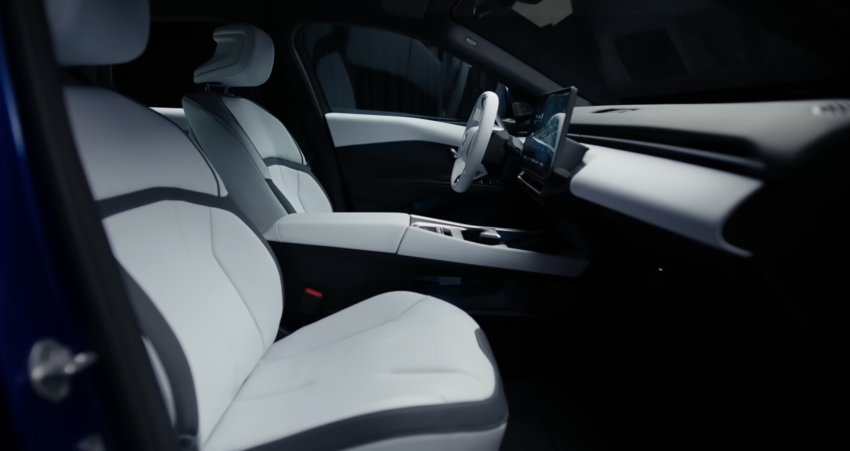
Upholstery and door panel and dashboard coverings are made from sustainable stuff that includes faux leather seating surfaces (real leather in the top-of-line “Individual” trim). The horizontal spokes of slightly squared-off steering wheel houses a number of capacitive switches for various functions and the 18″ infotainment screen is rhomboid in shape, its parallel sides leaning leftward – toward the driver – to make icon tapping a bit easier to do while still keeping an eye on the road.
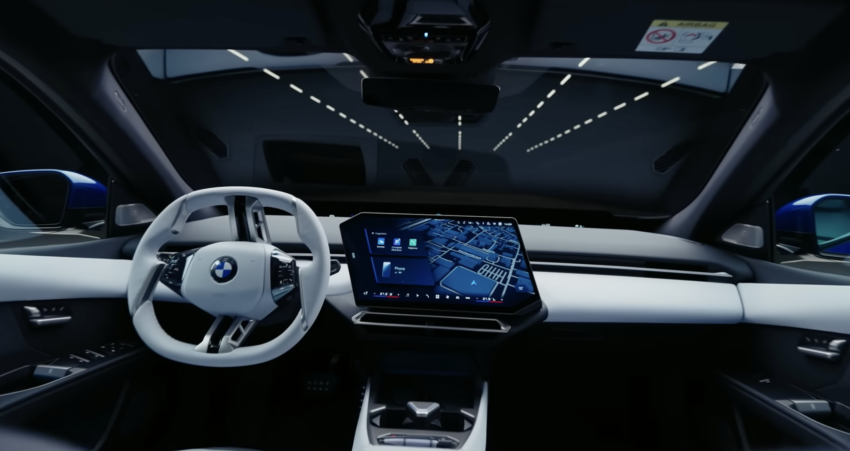
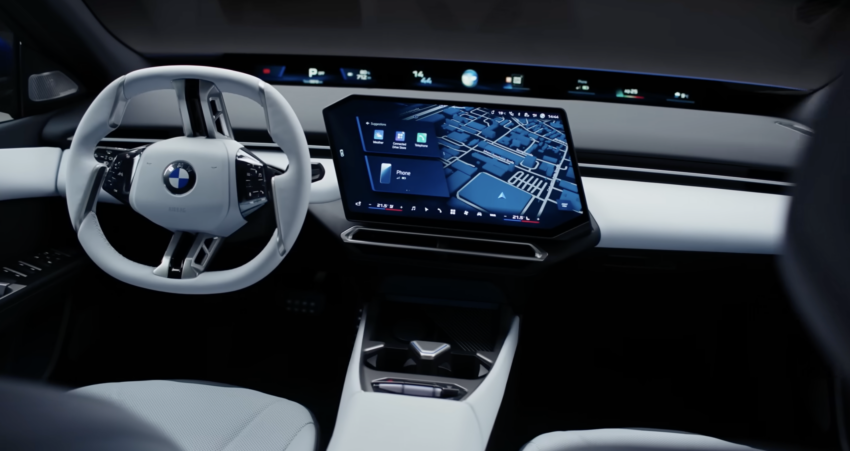
A full width “Panoramic Vision” replaces the conventional behind-the-wheel driver info screen with n array of vehicle, navigation and multimedia info – all configurable from the infotainment screen – projected along the bottom the windshield, and the icons and digital data reportedly are clean, crisp and readily viewable even through polarized sunglasses.
The infotainment system runs on BMW’s new Operating System X, which generally has won rave reviews for ease of use (after initial familiarization) and responsiveness from those who’ve experienced it in the iX3.
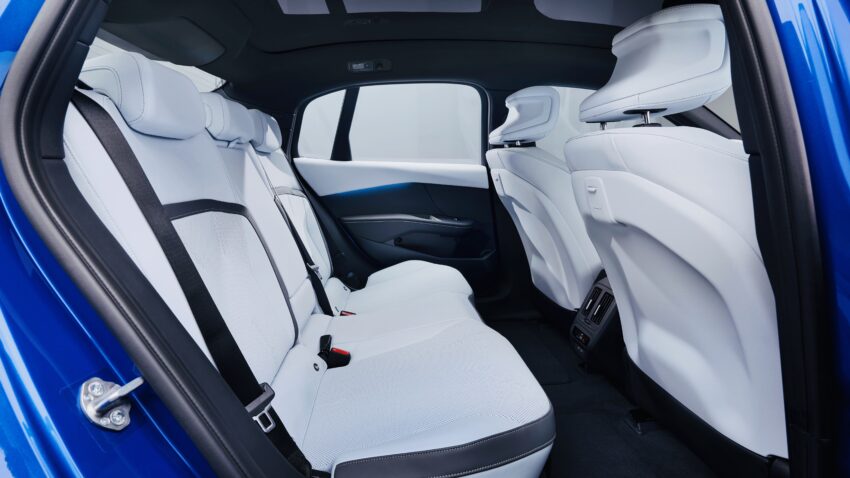
Cargo Capacities
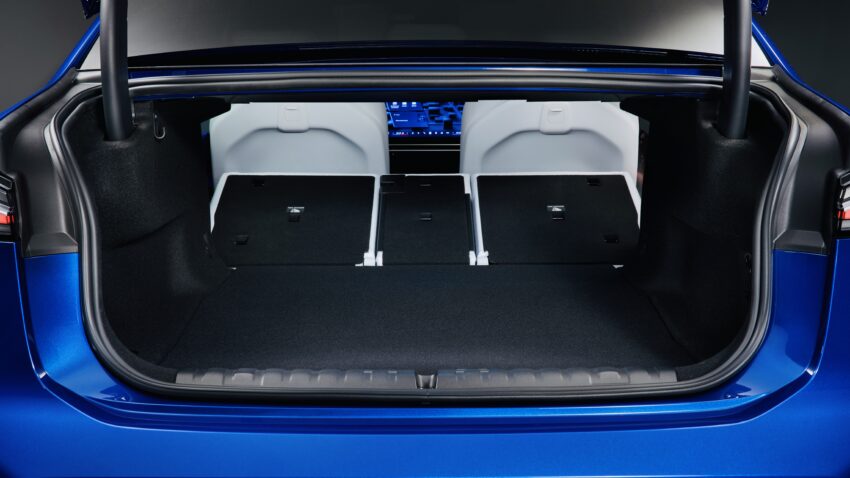
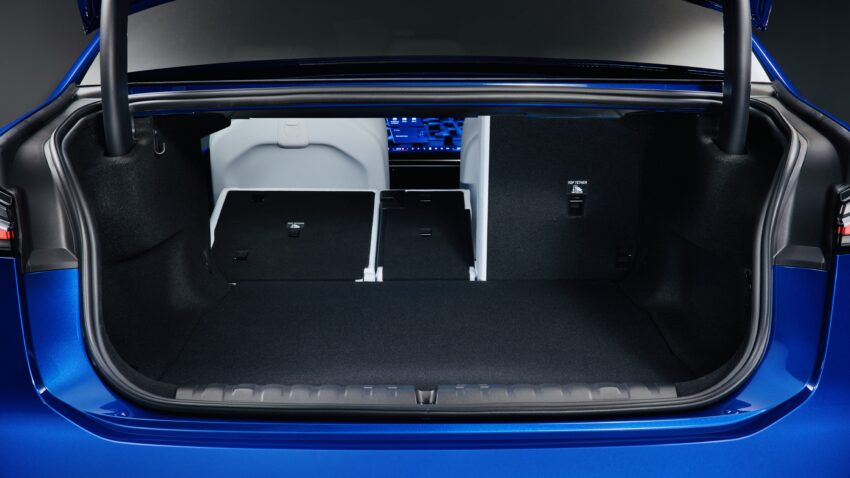
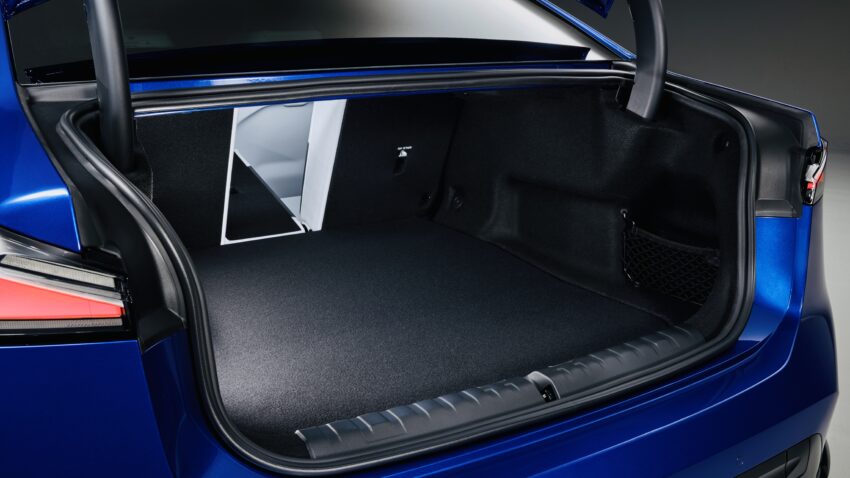
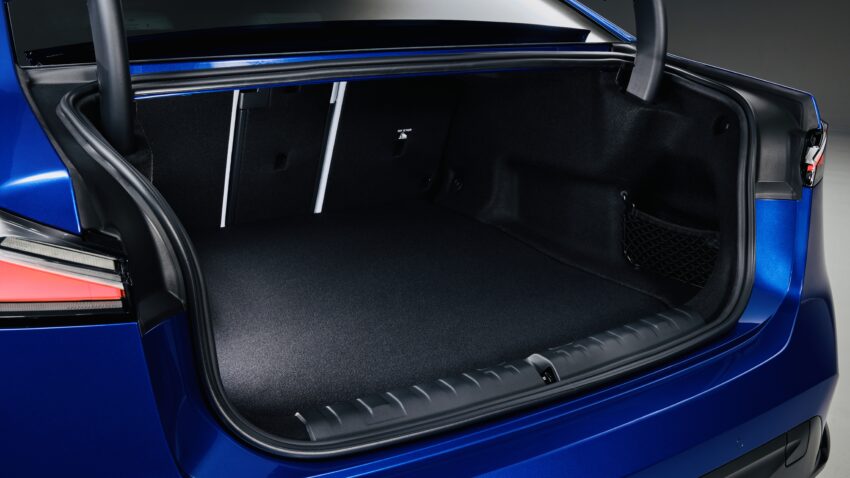
BMW hasn’t released all the specs for the i3 so we don’t know yet how roomy it will be or how large i†s carhgo hold. The company has said that with the split rear seats folded down, there’s a hefty 63 cubic feet of space for luggage and other stuff, as well as a long-item (skis anyone?) pass-through with the seat backs up. BMW-supplied photos show that while the i3 is sedan-like from the outside, its more hatchback inside. There’s no solid barrier between the trunk and passenger compartments. The foldable rear seats provide the separation when the seat backs are up.
Take a look:
Safety and driver assistance
As usual with BMW, there’s an impressive suite of advanced safety and driver assistance systems. Standard features will include Active Driving Assistant Plus system with adaptive cruise control, front automatic emergency braking, blind-spot monitoring, side cross-traffic alert and lane-keep assist.
An an optional system proivides hands-free auto-steering and automated lane changing (if you want) for highway driving. BMW says the system is non-intrusive – it won’t resist, as some systems do, if the driver wants to take over a process like changing lanes.
The BWM i3 also has a “B” position on the shift knob that enables one-pedal driving – a high level of regenerative braking that will bring the car to a full stop (except when really quick stops are needed) without use of the brake pedal.
AI and the i3
BMW says the i3’s software will be regularly updated with over-the-air releases, but its artificial intelligence system is self-learning and, thus, self-improving as well. At the start, artificial intelligence manifests itells in the i3’s Intelligent Personal Assistant. It enables the natural language voice control of various vehicle functions, navigation and media content.