

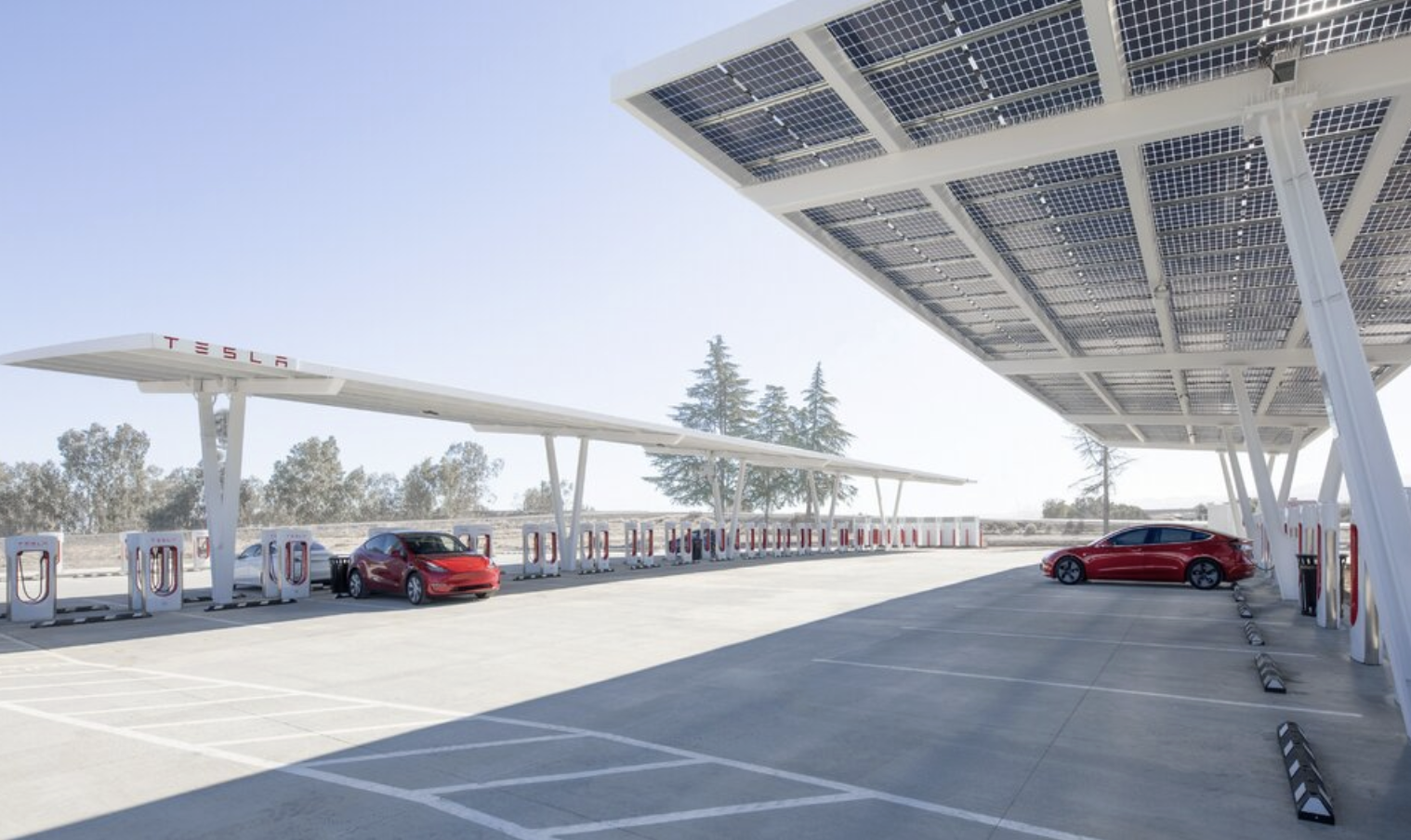
All modern electric vehicles are designed to be able to use a direct current (DC) fast charger. Without EV fast charging, long distance travel would be next to impossible.
But there are two kinds of DC chargers out there – Tesla’s Superchargers and everyone else’s, and not every EV is equipped to use both.
Whatever else one might think about him these days, it was Tesla chief Elon Musk’s foresight that made the Supercharger network is the biggest and most reliable of the various fast charger systems out there, but it uses a different connector than the others and until a few years ago could only be accessed by Tesla EVs.
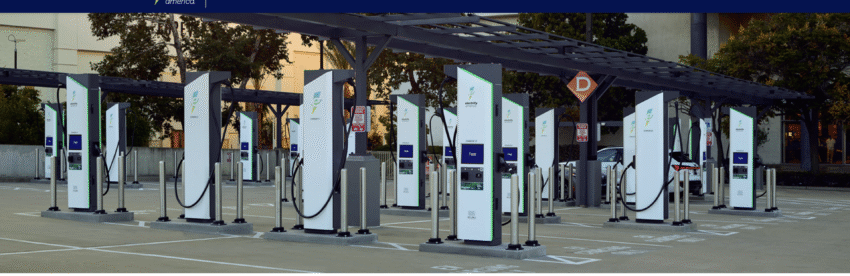
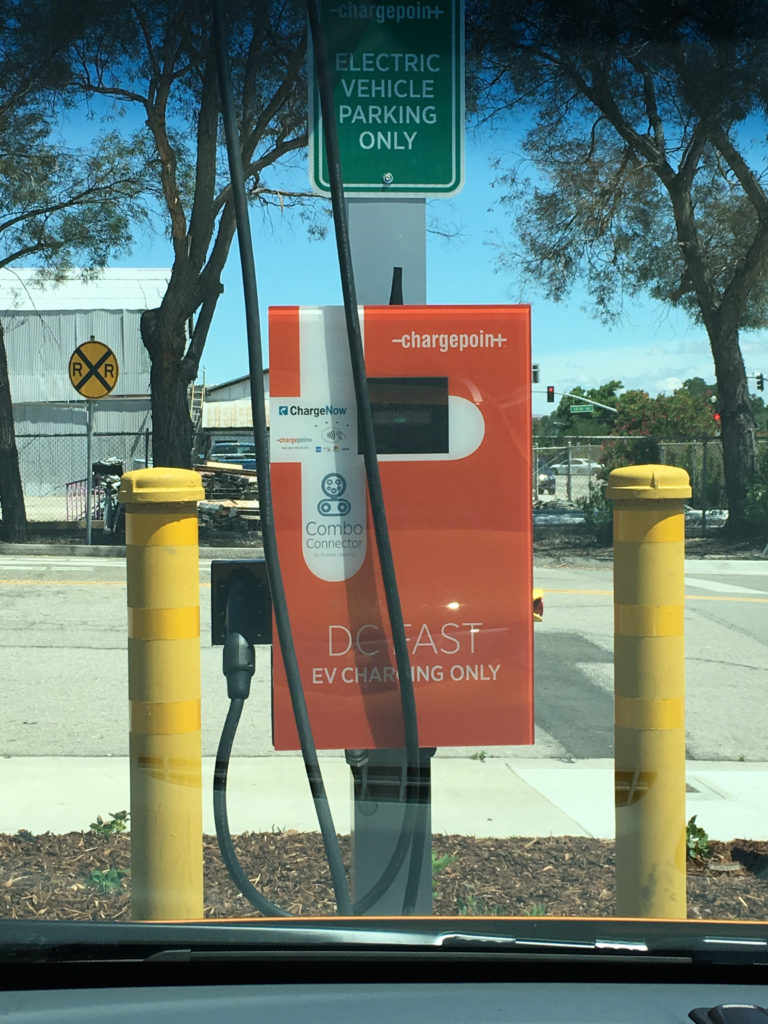
Conversely, the “other” direct current EV charging networks use a charging protocol called CCS or Combined Charging System. A few also offer CHAdeMo plugs, for the few EVs and plug-in hybrids that still use that system. Both require thicker cables and much larger connector nozzles than does the Tesla system, recently renamed NACS, or North American Charging Standard.
In fact, while the Tesla or NACS connector nozzle can be used for all three levels of charging (110, 240, and 400+ volts) a CCS of CHAdeMo nozzle is only used for Level 3, or DC fast charging. A separate nozzle dubbed the J1772 connector, and a separate port on the EV to receive it, are required for Level 1 or 110-volt, and Level 2, or 240-volt, charging.
Choose Me, Choose Me!
The name change from Tesla charging system to NACS was part of the opening barrage of Tesla’s successful campaign to make its EV charging network the universal standard. After all, the thinking likely went, EV drivers for the most part have to pay to use fast charging, so why not put more of that money into Tesla’s pockets?
It worked.
In short order, General Motors, Ford and several other EV makers struck deals to open the Supercharger network to their EVs. It required some system programming on Tesla’s part to enable the Superchargers to recognize the authorized non-Tesla models, and at first it required those “other” EVs to use specials adapters.
Most of the remaining automakers have since signed on to use the NACS system for their EVs and all are beginning to equip new models with NACS charging ports – which enable them to plug directly into a Supercharger or a NACS-compatible home (240 volt) charging station.
Just as Teslas have always been able to do, the new NACS-equipped EVs can also continue accessing CCS fast chargers by using a special adapter approved by Tesla and often, but not always, provided by the EV maker.
In a few decades, when all of the CCS-equipped EVs have been retired, only NACS charging – and chargers – will survive.
How many, and Where?
The counts change almost daily, but right now there about 37,000 NACS charging ports in the U.S. and Canada -fewer than 3,000 in Canada – versus 32,000 CCS ports, including about 4,600 in Canada.
But the Superchargers are divided among 3,670 locations for an average of 10 chargers per station. There are about 12,250 CCS stations throughout the US and Canada, but they offer an average of only 2.6 charging connectors per station.
The advantage of the Supercharger network is that its stations typically are clean, well-lighted, conveniently located along major interstate and intrastate highway systems, have enough chargers so drivers don’t have to queue up for hours, and are convenient to amenities such as restrooms, restaurants, fast-food outlets and, sometimes, shopping malls.
You can find stations by connector type on a number of vehicle and charging apps as well as on the regularly updated federal Alternative Fueling Station Locator. Many also allow you to input a route – start, finish and waypoints, and will show you that fast chargers along it.
CCS fast charge networks are getting a lot better these days but for too long were plagued by poor maintenance, non-working chargers, lousy locations and poor – if any – amenities. Because a comprehensive national network requires a huge investment, most CCS networks started small and grew willy-nilly. Dozens of operators got into the business, so EV drivers using CCS stations have had to learn to deal with multiple access and payment procedures, while Tesla provided automatic “plug-charge-and-play” access for its vehicles.
Which Can Use What?
In short, all Teslas can use all Superchargers and, with an adapter, all CCS fast-charge stations.

Other EVs (except 2011-2025 Nissan Leafs and Mitsubishi EVs and PHEVs) can use all CCS stations and most Superchargers – about 25,500 of them right now because Tesla reserves a few of its chargers at at each location for Teslas only.


Nissan’s Leaf through the 2025 model, as well as those Mitsubishis – iMiEVs and Outlander plug-in hybrids at least through the 2026 model year – use the outdated CHAdeMo fast charging system developed in Japan (remember, the Leaf came out before there was a CCS fast charge standard). There are about 7,800 CHAdeMo charging stations – usually at CCS locations – in the U.S. and Canada, offering just over 11,500 charging connectors. With Nissan converting the Leaf to NACS in the 2026 model year redesign, CHAdeMo stations likely will be the first to disappear.
EVs whose manufacturers have not yet signed agreements with Tesla can still access a handful of Superchargers by using a “Magic Dock” adapter Tesla provides at a handful of its stations. But they are very few and quite far between.

Tesla’s app filters its stations so EV drivers can find only those that allow Teslas, or only those with Magic Docks, as well, of course, as those that allow access to non-Tesla brands covered by with access agreements.
Who’s Got Supercharger Agreements?
To date, automakers representing these 18 brands brands have signed Supercharger access agreements:
- Acura
- Audi
- Ford
- General Motors
- Genesis
- Honda
- Hyundai
- Kia
- Jaguar
- Land Rover
- Lucid
- Mercedes-Benz
- Nissan
- Polestar
- Porsche
- Rivian
- Volkswagen
- Volvo
Three others – BMW, Toyota and Subaru – are in line but haven’t been granted access yet.
We’ll update this list as new agreements are completed.