

It’s not a big surprise. Stellantis – never a big fan of electric vehicles – said it is canceling its lineup of three plug-in hybrid models, citing falling consumer demand in the wake of lapsed federal tax incentives.
The phaseout will begin with the 2026 model year, the company said in an announcement Friday.
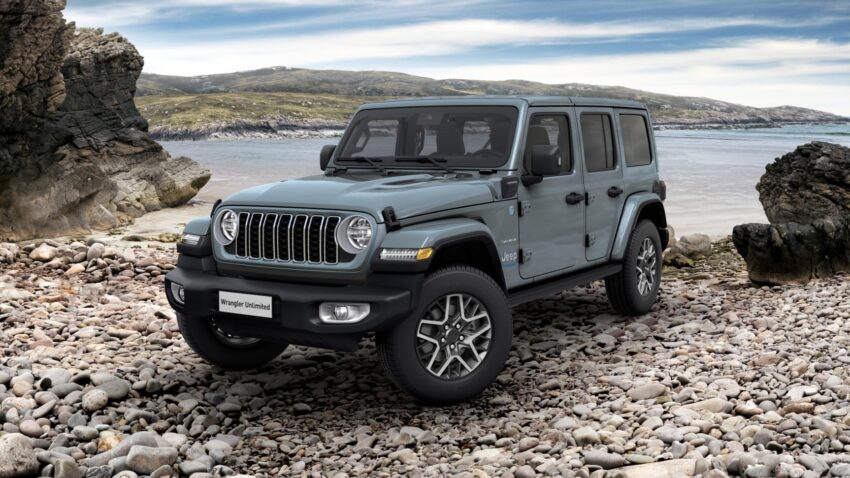
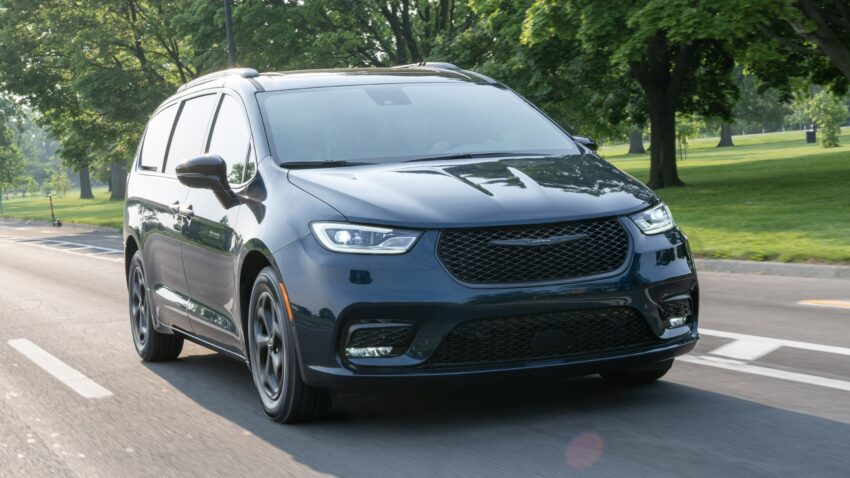
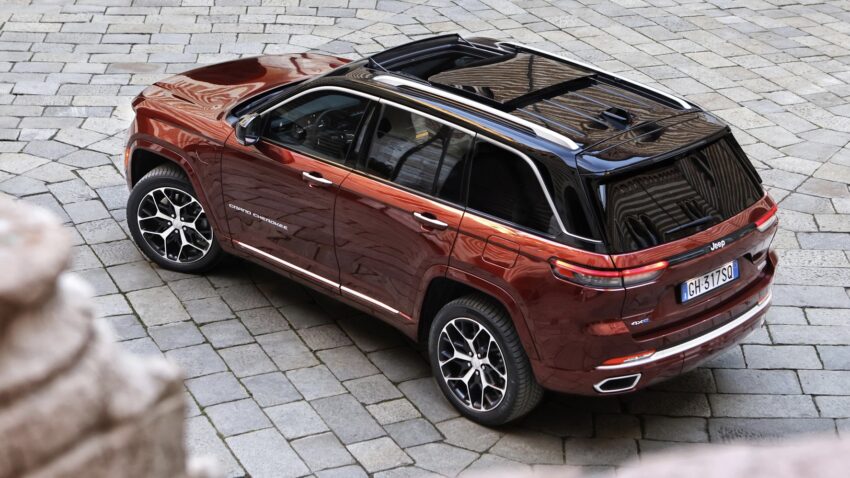
The models involved are the plug-in hybrid versions of the Chrysler Pacifica minivan, called the Pacifica Hybrid, and the Jeep Wrangler and Jeep Grand Cherokee, both designated as 4xe models.
Although the Jeep PHEVs didn’t represent much improvement over conventional ICE models for fuel efficiency, the three plug-in hybrid models enabled Stellantis to use complex federal rules for computing fuel efficiency for regulatory purposes to help offset the poor fuel economy of its other U.S. offerings in order to come close to meeting federal fleet fuel efficiency standards.
But toeing the line is no big deal now under the Trump regime’s near abandonment of those standards.
Not abandoning electrification
The company did say it its fuel efficiency efforts will continue with the focus now on conventional hybrids and range-extended EVs, which use an on-board fossil fuel engine as a generator to provide electricity for the electric motor.
That means the previously announced Ram 1500 REV pickup, which uses a V6 as a generator to provide power to its 92-kWH battery pack, is still on for launch later this year.
According to Stellantis, the generator-assisted electric pickup will deliver up to 145 miles on a fully charged battery (it needs to be plugged in to charge) and then the generator will give it an additional 545 miles of range on a 27-gallon tank of gas. That’s the equivalent of 20 mpg after the battery charge is depleted or 25.5 mpg for the combined fully charged battery and full tank of gas.
Jeep also plans to continue marketing battery-electric vehicles (BEVs) such as the Wagoneer S and the upcoming Recon, both midsize SUVs.
The continuation of BEVs and EREVs is driven in part by the need to continue developing a technology that, while in the doldrums in the U.S. under the Trump Administration’s “drill baby, drill” pro-oil policies, is still being pushed in China and many parts of Europe.
Full-line carmakers without viable EV technology jeopardize their ability to compete well in the global market.
Good-bye, PHEVs
But Stellantis’ plug-in hybrids are gone.
The Pacifica has been on the market since 2016 as the only PHEV minivan available in the U.S.
It was a big deal when introduced – up to 32 miles of all-electric range and 30 mpg after that for a total of morte than 500 miles of range – and has contend to be a well-reviewed model. But it costs $8,000 to $10,000 more than its conventional ICE counterpart and has been in market almost a decade now with only two major upgrades – new styling and upgraded tech in 2021 and battery tech, infotainment system and safety features upgrades for the 2025 and now-discontinued ’26 model years.
Sales began slumping as the Pacifica Hybrid’s federal tax credit eligibility began phasing out in early 2024. The credit ended in mid-2025.
As for the Jeep PHEVs – we always wondered about their value.
While they also cost about $10,000 more than their ICE counterparts before tax credits that expired last year, they offered relatively little all-electric range – 22 miles for the Wrangler 4Xe and 26 miles for the Grand Cherokee 4xe – and no boost in efficiency compared to their ICE counterparts once the battery charge was depleted.